Product Roadmap 2026 Guide: How to Create & Real Examples
Learn how to build a product roadmap in 2026 with real examples, templates, and step-by-step guidance. Discover roadmap types, best practices, and AI-powered workflows.

In 2026, product development cycles are faster, cross-functional coordination is more complex, and market expectations shift more rapidly than ever. A product roadmap is no longer just a planning artifact—it is a strategic alignment tool that connects vision, execution, and measurable outcomes.
Modern product teams operate across distributed environments, integrate AI into workflows, and balance short-term delivery with long-term positioning. Without a clear roadmap, teams risk:
- Building disconnected features
- Overcommitting without prioritization logic
- Losing sight of strategic goals
- Misaligning product, engineering, marketing, and leadership
A well-designed product roadmap acts as a communication bridge between strategy and execution. It ensures that everyone understands not just what is being built, but why—and in what order.
What Is a Product Roadmap?
A product roadmap is a strategic document that outlines the direction, priorities, and high-level timeline for a product’s evolution.
It does not replace detailed sprint planning or task tracking. Instead, it provides a macro-level view of:
- Product vision and goals
- Major initiatives or themes
- Priority sequencing
- Expected outcomes
- Time horizons (without over-specifying delivery dates)
Unlike a project plan, a roadmap communicates intent rather than fixed commitments. It balances flexibility with clarity, allowing teams to adapt while staying aligned.
In a Product Lifecycle Management (PLM) context, the roadmap serves as the connective tissue between early-stage discovery, development, launch, optimization, and eventual iteration or retirement.
Why Is a Product Roadmap Important?
A product roadmap is not just a planning artifact. It plays a different strategic role depending on who is looking at it. The value of a roadmap increases when each function understands how to use it properly.
For Product Managers
For product managers, the roadmap is a prioritization discipline tool. It forces clarity around tradeoffs. Every roadmap decision implicitly answers difficult questions: What are we not building? What is delayed? What is strategically essential versus opportunistic?
A well-structured roadmap helps PMs:
- Defend prioritization decisions with documented logic
- Balance short-term feature delivery with long-term platform health
- Align roadmap themes with measurable outcomes
- Reduce reactive feature creep from stakeholder pressure
- Maintain narrative continuity across quarters
Without a roadmap, product work becomes reactive and fragmented. With one, product managers can anchor conversations in structured intent rather than urgency.
For Engineering Teams
For engineering, the roadmap provides architectural foresight.
Engineering leaders use roadmaps to anticipate technical debt, infrastructure constraints, and scaling implications. If future roadmap themes include AI capabilities, internationalization, or enterprise compliance, architectural planning must start early—even before feature-level requirements are finalized.
A clear roadmap helps engineering teams:
- Plan foundational investments ahead of feature work
- Avoid repeated rework caused by shifting priorities
- Align capacity planning with long-term goals
- Understand dependency sequencing
- Reduce late-stage technical surprises
In complex systems, roadmap visibility directly reduces downstream rework and architectural instability.
For Design Teams
Design teams rely on roadmap clarity to maintain product coherence.
When roadmap themes are clear, designers can anticipate system-level implications—rather than designing feature-by-feature in isolation. They can prepare scalable UI systems, anticipate research needs, and maintain consistent user experiences across initiatives.
A roadmap helps design teams:
- Align UX research with upcoming initiatives
- Maintain visual and interaction consistency
- Prepare scalable design systems
- Balance innovation with usability continuity
- Avoid redesign loops caused by shifting strategy
Without roadmap clarity, design work risks becoming tactical rather than systemic.
For Marketing & Sales Teams
For go-to-market teams, the roadmap provides strategic timing signals.
Marketing needs early visibility into upcoming releases to prepare positioning, messaging, and content pipelines. Sales teams need clarity to set realistic customer expectations.
A roadmap helps marketing and sales:
- Prepare campaign narratives aligned with product evolution
- Avoid overpromising features not yet validated
- Develop launch sequencing strategies
- Coordinate content production timelines
- Align messaging with actual roadmap direction
When roadmaps are vague or inconsistent, launch alignment breaks down quickly.
For Leadership & Executives
Executives view the roadmap as a strategic coherence check.
It reveals whether product investments align with company vision, financial targets, and competitive positioning. It also signals whether the organization is disciplined or reactive.
Leadership uses roadmaps to:
- Evaluate resource allocation logic
- Identify portfolio risk concentration
- Align product investment with business strategy
- Assess execution feasibility
- Communicate direction to boards or investors
In mature organizations, the roadmap becomes an enterprise-level decision artifact—not just a product team tool.
How to Build a Successful Product Roadmap (Step-by-Step)
Building a product roadmap is not about filling a timeline with features. It is about translating long-term product intent into an executable, cross-functional alignment system. Strong roadmaps emerge from disciplined thinking, not scheduling software.
Step 1: Anchor the Roadmap in Product Vision and Strategy
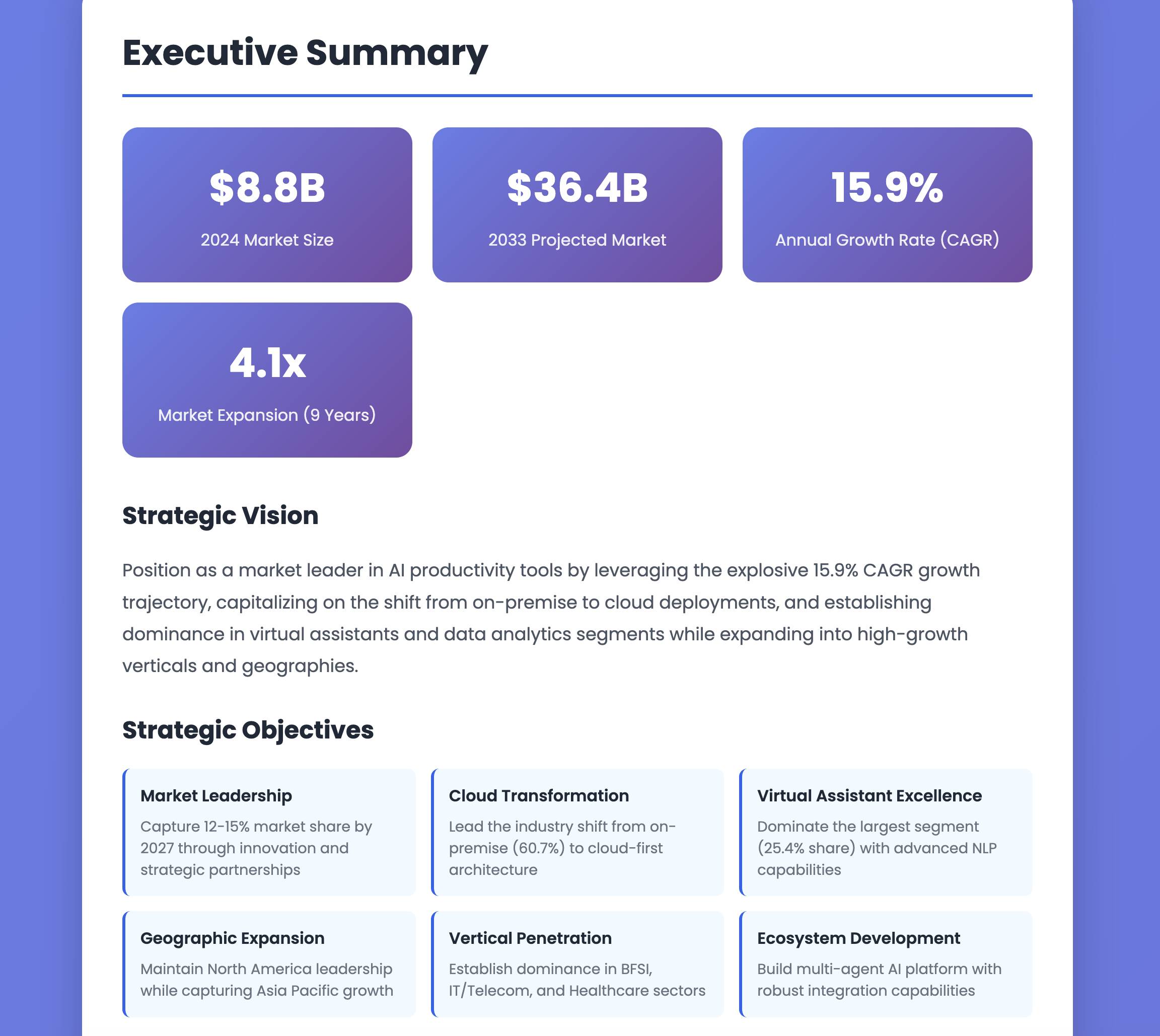
Every roadmap should begin with clarity about where the product is heading—not just what it will ship next quarter. Before listing initiatives, teams must define the product vision: What long-term problem are we solving? What customer segment are we prioritizing? What kind of product are we becoming?
This strategic anchor prevents short-term opportunism from dominating planning discussions. Without it, roadmaps become reactive lists shaped by immediate requests rather than long-term positioning.
At this stage, product leaders should articulate:
- The core customer problem the product exists to solve
- The product’s differentiation in the market
- The measurable business outcomes the roadmap should support
Those outcomes might include revenue expansion, retention improvement, operational efficiency, cost reduction, platform extensibility, or ecosystem growth. Explicitly connecting roadmap initiatives to these outcomes transforms the roadmap from a planning artifact into a strategy execution instrument.
Step 2: Translate Strategy into Strategic Themes

Instead of jumping directly to features, successful roadmap design groups work into strategic themes. Themes represent coherent problem spaces or value areas that reflect the product’s direction.
For example, rather than listing ten individual features, a roadmap might define themes such as:
- Enterprise readiness
- AI-powered automation
- Customer onboarding optimization
- Performance and scalability
- Ecosystem integrations
Each theme should correspond to a clearly defined objective. This structure helps teams reason at the right level of abstraction. Stakeholders debate the importance of themes before debating the priority of specific features.
Strategic themes also improve communication. Executives and cross-functional teams can quickly understand direction without getting lost in implementation details.
Step 3: Integrate Evidence Before Prioritization

A roadmap gains credibility when its priorities are grounded in evidence rather than opinion.
At this stage, teams gather inputs from multiple sources:
Customer interviews, support tickets, usage analytics, churn patterns, competitive analysis, technical feasibility assessments, regulatory requirements, and operational constraints all inform prioritization decisions.
Rather than treating each input equally, teams should assess:
- Customer impact magnitude
- Strategic alignment
- Implementation complexity
- Risk level
- Time sensitivity
While prioritization frameworks (such as RICE or value-versus-effort matrices) can support clarity, the key is transparency. Documenting the reasoning behind tradeoffs reduces friction later. When stakeholders understand why something is prioritized—or deprioritized—they are more likely to support the plan.
Roadmaps fail not because decisions are imperfect, but because decision logic is opaque.
Step 4: Sequence Initiatives Based on Dependencies and Risk

Sequencing is one of the most underestimated aspects of roadmap design.
It is not merely a chronological ordering exercise. Instead, sequencing should reflect structural logic. Foundational investments—such as infrastructure upgrades, architecture refactoring, compliance readiness, or data standardization—often need to precede visible feature delivery.
Effective sequencing considers:
- Technical dependencies between initiatives
- Organizational capacity constraints
- Market timing pressures
- Risk mitigation priorities
- Long-term architectural implications
When sequencing is poorly designed, teams ship features that later require rework. When sequencing is intentional, teams build leverage over time.
The roadmap should make these dependencies visible, not hidden in engineering discussions.
Step 5: Select an Appropriate Time Horizon

Precision can create false confidence. Overly detailed long-term roadmaps often collapse under changing conditions.
Instead of assigning fixed deadlines too early, teams should choose a time horizon model that reflects their environment.
Early-stage startups may benefit from flexible models such as Now / Next / Later structures, allowing strategic agility. More mature organizations may use quarterly buckets, while regulated industries might require multi-year planning views.
The key is balancing clarity with adaptability. A roadmap should provide directional confidence without pretending to predict uncertainty perfectly.
Step 6: Validate Cross-Functionally Before Finalization
Before publishing a roadmap, product leaders should stress-test it with critical stakeholders.
Engineering should confirm architectural feasibility. Design should evaluate systemic coherence. Marketing should assess go-to-market implications. Operations should review scalability assumptions. Leadership should validate alignment with company-level objectives.
This cross-functional review process often surfaces blind spots that pure product thinking might miss.
Strong roadmaps are collaborative artifacts, not unilateral declarations.
Step 7: Maintain the Roadmap as a Living Strategic System
A roadmap is not a static commitment document. It should evolve alongside:
- Customer feedback
- Competitive shifts
- Technical discoveries
- Organizational learning
- Market conditions
Establish recurring roadmap review cadences. Treat each review as an opportunity to refine—not rewrite—the strategic direction.
The goal is stability in intent, flexibility in execution.
Organizations that view roadmaps as living systems consistently outperform those that treat them as one-time planning exercises.
Types of Product Roadmaps
Different roadmap formats serve different strategic and communication purposes. Choosing the right format depends on audience, product maturity, and organizational complexity.
Strategic Roadmap

A strategic roadmap focuses on direction rather than deliverables. It highlights long-term initiatives and major themes without excessive implementation detail.
This type of roadmap is most useful for executive alignment, investor communication, and cross-department visibility. It emphasizes “where we are going” over “what we are building next week.”
Strategic roadmaps often span 12–36 months and organize initiatives into broad thematic categories. They are particularly valuable when the product is undergoing transformation, entering new markets, or shifting positioning.
Feature-Based Roadmap
A feature-based roadmap lists specific deliverables with approximate timeframes.
While sometimes criticized for encouraging output-driven thinking, this format can be effective in execution-heavy environments where teams require clarity about what is being built.
Feature-based roadmaps are typically more granular and may include dependencies, owner information, and status indicators.
However, they should not exist in isolation. Without strategic framing, feature lists can quickly devolve into backlog summaries rather than directional guidance.
Timeline-Based Roadmap

Timeline-based roadmaps organize initiatives into defined calendar periods—often quarterly or monthly buckets.
These roadmaps provide predictability and are useful in organizations where external commitments or regulatory constraints require planning discipline.
The risk of this format lies in overcommitment. Teams must resist the temptation to assign precise dates to initiatives that are not yet well-defined.
Used wisely, timeline roadmaps communicate pacing and coordination across departments.
Now–Next–Later Roadmap
The Now–Next–Later model is increasingly popular among agile product teams.
Rather than locking initiatives into rigid deadlines, this format communicates priority order. It answers the question: What are we focusing on right now? What is coming soon? What is further out?
This structure works especially well in high-uncertainty environments. It maintains transparency while preserving flexibility.
Because it avoids calendar precision, it encourages strategic prioritization discussions instead of deadline debates.
Goal-Oriented Roadmap
A goal-oriented roadmap centers around outcomes rather than features.
Instead of listing initiatives directly, it begins with measurable objectives. Initiatives are then grouped under each goal.
For example:
- Improve onboarding conversion rate by 20%
- Reduce churn in the first 90 days
- Increase enterprise adoption
This format keeps teams focused on results. It also aligns naturally with OKR-driven organizations.
Goal-oriented roadmaps reinforce accountability and discourage feature inflation.
Portfolio Roadmap
In larger organizations managing multiple products or business lines, portfolio roadmaps provide cross-product visibility.
They help leadership understand investment distribution across categories such as:
- Innovation vs optimization
- Core product vs experimental initiatives
- New markets vs retention improvements
Portfolio roadmaps operate at a higher level of abstraction and are essential for enterprise-level resource planning.
Choosing the Right Roadmap Format
There is no universally correct roadmap type. Many mature organizations maintain multiple roadmap views tailored to different audiences.
- Executives may review strategic or portfolio roadmaps.
- Engineering may rely on feature-level or timeline roadmaps.
- Cross-functional stakeholders may prefer goal-oriented or Now–Next–Later formats.
The most effective roadmap systems allow dynamic representation of the same strategic plan across multiple views—without losing coherence.
How to Build Product Roadmaps More Efficiently with Kuse
Traditional roadmap building involves scattered documents—research reports, competitor analyses, PRDs, customer feedback, and strategy decks.

Kuse streamlines this process by acting as a structured knowledge layer.
In practice, teams can:
- Upload research documents, PRDs, user feedback, and competitive reports
- Ask Kuse to synthesize themes across sources
- Generate roadmap drafts organized by strategic initiatives
- Convert roadmap outputs into presentation decks or stakeholder summaries
- Update roadmaps dynamically as new information is added
Example prompt inside Kuse:
“Analyze these product documents and generate a strategic product roadmap organized by themes, including Now–Next–Later prioritization and measurable outcomes.”
Because Kuse retains context across sessions, it supports roadmap evolution rather than one-off generation. This makes it especially useful in fast-moving product environments.
Conclusion
In 2026, a product roadmap is not simply a planning document—it is a strategic coordination system.
It connects vision to execution, prioritization to delivery, and long-term ambition to short-term action.
Teams that treat roadmaps as living strategic tools—rather than static feature lists—build more coherent products, reduce internal friction, and respond faster to change.
With the rise of AI-powered workflows, roadmap creation is becoming more intelligent, contextual, and adaptive. The competitive advantage will not belong to teams that plan the most—but to those that align and iterate the best.